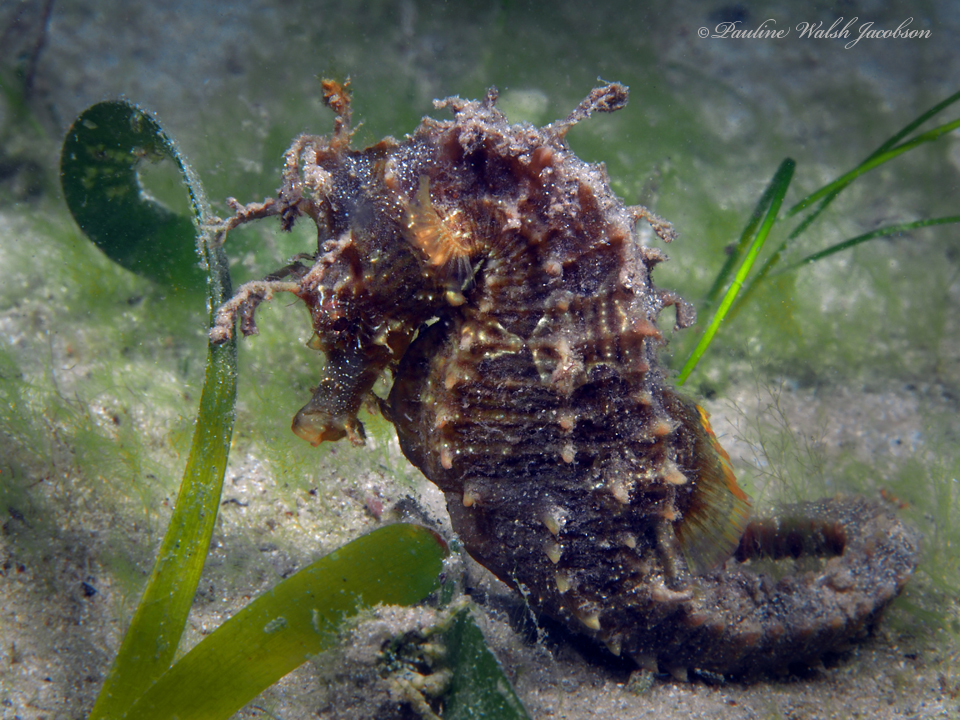
About Northern Seahorse
Captive-bred lined seahorses are one of the few seahorses suited to home aquariums. They need a species-specific tank with hitching posts, slow flow, and 3–4 small meals daily. Not compatible with active fish that would outcompete them at feeding.
The lined seahorse, northern seahorse or spotted seahorse, is a species of fish that belongs to the family Syngnathidae. H. erectus is a diurnal species with an approximate length of 15 cm and lifespan of one to four years. The H. erectus species can be found in myriad colors, from greys and blacks to reds, greens, and oranges. The lined seahorse lives in the western Atlantic Ocean as far north as Cape Cod and as far south as the Caribbean, Mexico, and Venezuela. It swims in an erect position and uses its dorsal and pectoral fins for guidance while swimming.
Notes from the editors
What it looks like. Classic seahorse body with prominent coronet and color variation from black and grey to red, orange, and green. Captive-bred specimens are dramatically more colorful than wild.
In your tank. Species-specific tank only. Cannot compete with active fish for food. Needs hitching posts (artificial macroalgae, soft corals), slow flow, and frequent small meals.
Care notes. 3–4 small feedings per day are required — high commitment. Vibrio bacterial infections are the most common cause of loss. Quarantine all new arrivals.
Sourcing and feeding. Captive-bred only (ORA, Seahorse Source, others) — wild-caught specimens have abysmal survival rates and the practice is widely discouraged. Mid-to-premium priced ($50–150 per fish). Carnivore — frozen mysis enriched with vitamins, multiple feedings daily.
Care info is a starting point, not a guarantee. Individual specimens, water chemistry, and tankmate dynamics vary. Verify against multiple sources and adjust to what you observe. See our terms & disclaimers.
Related fish


Sources & attribution
- Taxonomy and accepted name from the World Register of Marine Species (WoRMS AphiaID 159445).
- Description content adapted from Wikipedia, available under CC BY-SA 4.0.
- Photo: (c) Pauline Walsh Jacobson, some rights reserved (CC BY) · CC-BY (via iNaturalist or Wikimedia Commons).