About Queen Angelfish
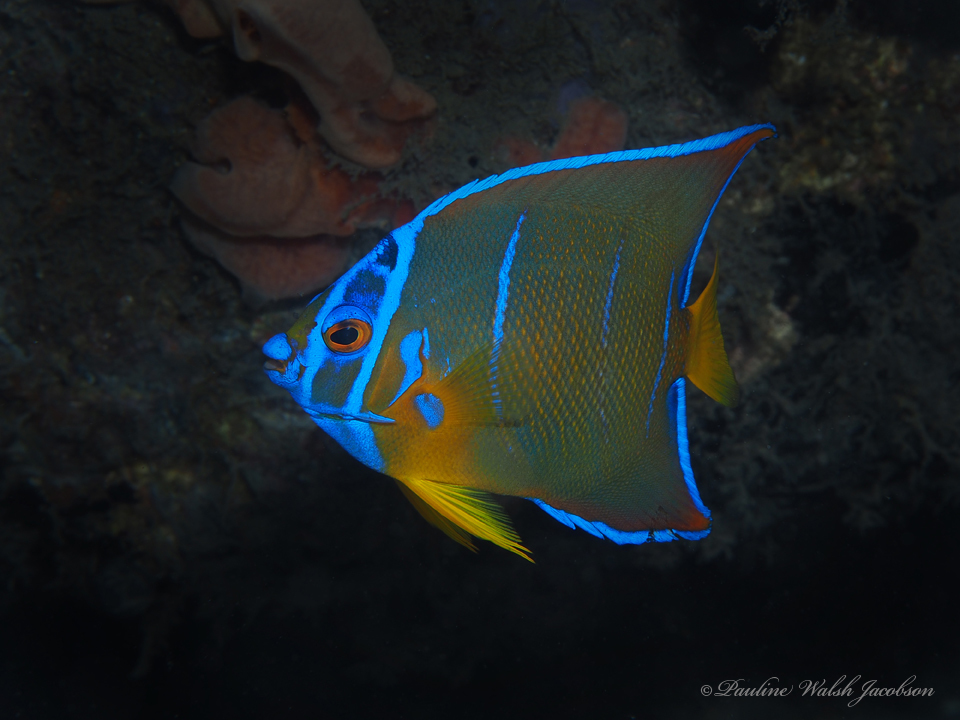
Caribbean queen angel — large, brilliantly colored, and a centerpiece for big systems only. Will pick at LPS and sponges; treat as fish-only-with-live-rock. Juveniles and adults look like different species, both stunning.
The queen angelfish, also known as the blue angelfish, golden angelfish, or yellow angelfish, is a species of marine angelfish found in the western Atlantic Ocean. It is a benthic warm-water species that lives in coral reefs. It is recognized by its blue and yellow coloration and a distinctive spot or "crown" on its forehead. This crown distinguishes it from the closely related and similar-looking Bermuda blue angelfish, with which it overlaps in range and can interbreed.
Notes from the editors
What it looks like. Striking blue and yellow adult coloration with a distinctive blue "crown" or spot on the forehead. Juveniles are dramatically different — blue with yellow vertical bars. One of the most photogenic Caribbean angels.
In your tank. Large angelfish — adults reach 18 inches. Long-term housing requires 220+ gallons. Will pick at LPS, sponges, and corallimorphs; treat as fish-only-with-live-rock.
Care notes. Semi-aggressive toward other angelfish. Hardy once acclimated. Juveniles ship more reliably than adults.
Sourcing and feeding. Wild-collected from Caribbean reefs; widely available ($100–400 depending on size). Omnivore — sponge-based angel formulas, mysis, prepared marine foods, algae.
Care info is a starting point, not a guarantee. Individual specimens, water chemistry, and tankmate dynamics vary. Verify against multiple sources and adjust to what you observe. See our terms & disclaimers.
Related fish


Sources & attribution
- Taxonomy and accepted name from the World Register of Marine Species (WoRMS AphiaID 276012).
- Description content adapted from Wikipedia, available under CC BY-SA 4.0.
- Photo: (c) Pauline Walsh Jacobson, some rights reserved (CC BY) · CC-BY (via iNaturalist or Wikimedia Commons).