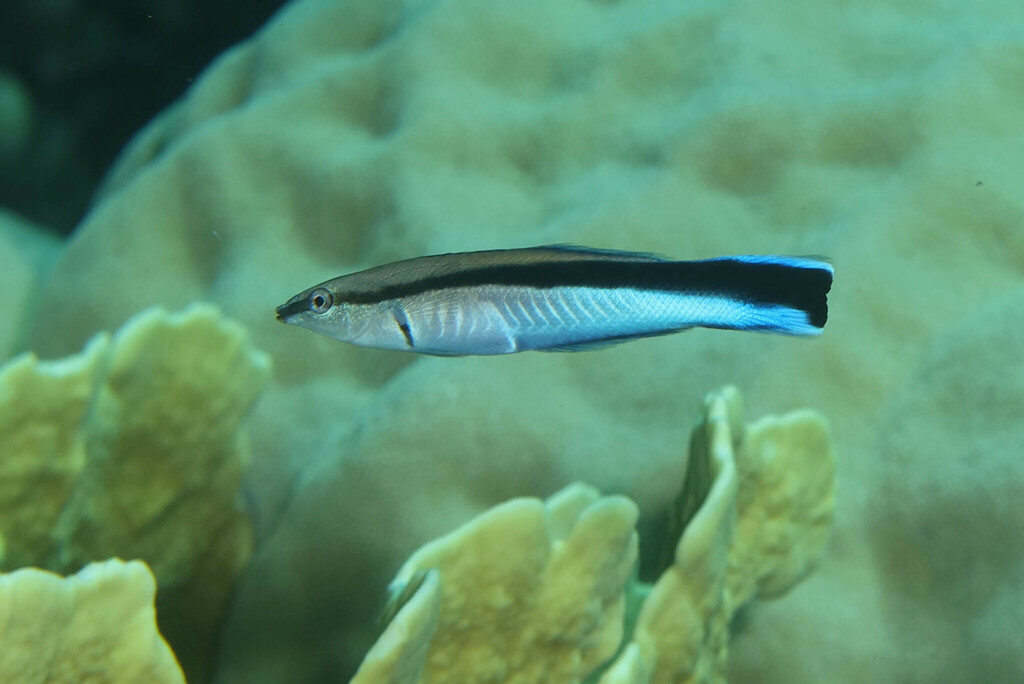
About Bluestreak Cleaner Wrasse
The bluestreak cleaner wrasse looks irresistible and we don't recommend it. They specialize on parasites in the wild; in captivity most starve within months. Captive-bred neon gobies (Elacatinus oceanops) do the same job and thrive.
The bluestreak cleaner wrasse is one of several species of cleaner wrasses found on coral reefs from Eastern Africa and the Red Sea to French Polynesia. Like other cleaner wrasses, it eats parasites and dead tissue off larger fishes' skin in a mutualistic relationship that provides food and protection for the wrasse and considerable health benefits for the other fishes. It is also notable for having potentially passed the mirror test.
Notes from the editors
What it looks like. Slender body with a bold black horizontal stripe edged in iridescent blue. Sets up cleaning stations and picks parasites off larger fish — both in the wild and the aquarium.
In your tank. We do not recommend purchasing this species. Specialist cleaner that depends on parasites and dead tissue from other fish in the wild. In captivity, most specimens starve within 6 months despite apparent feeding. Captive-bred neon gobies (Elacatinus oceanops) do the same cleaning job and thrive long-term.
Care notes. If kept, requires a tank with multiple larger fish to clean. Will accept prepared foods inconsistently. Reef-safe but not a sustainable hobby choice.
Sourcing and feeding. Wild-collected from Indo-Pacific reefs; widely available but ethical and survival concerns warrant skipping in favor of cleaner gobies. Carnivore — mysis, brine, pellets (when feeding).
Care info is a starting point, not a guarantee. Individual specimens, water chemistry, and tankmate dynamics vary. Verify against multiple sources and adjust to what you observe. See our terms & disclaimers.
Related fish


Sources & attribution
- Taxonomy and accepted name from the World Register of Marine Species (WoRMS AphiaID 219014).
- Description content adapted from Wikipedia, available under CC BY-SA 4.0.
- Photo: (c) Julien Renoult, some rights reserved (CC BY) · CC-BY (via iNaturalist or Wikimedia Commons).