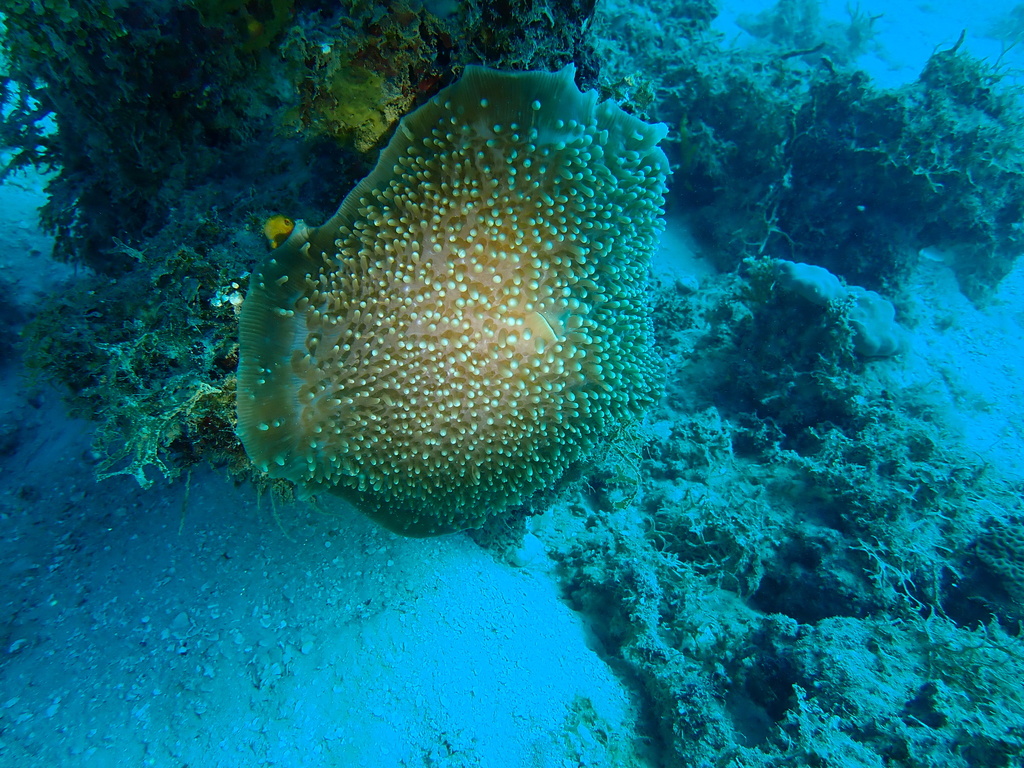
About Elephant Ear Anemone
An oversized mushroom that can reach the size of a dinner plate — striking as a centerpiece, but it's a predator. Adult specimens will close around small fish and shrimp; not safe in nano reefs with delicate fauna.
Amplexidiscus fenestrafer, also known as the elephant ear anemone, is a species of coral belonging to the phylum Cnidaria. The name "elephant ear anemone" is a misnomer because it is actually a species of coral. It is the only species in the monotypic genus Amplexidiscus.
Notes from the editors
What it looks like. An oversized mushroom corallimorph that can reach 12+ inches across — substantially larger than common Discosoma or Rhodactis mushrooms. Coloration ranges from olive green to tan, often with a textured "elephant skin" appearance and a contrasting mouth.
In your tank. Predatory despite the mushroom classification. The disc curls into a closed sphere around prey, then digests it — small fish, shrimp, and other slow-moving inverts in close proximity are at real risk. Not suitable for nano reefs with delicate fauna.
Placement and care. Place on the sandbed or low rockwork in lower light areas. Will reproduce by pedal laceration, generating new specimens over time. Keep away from anemones and small fish you'd hate to lose.
Sourcing and feeding. Available occasionally in the trade as wild-collected specimens; not commonly captive-propagated. Photosynthetic but actively predates — supplemental feeding isn't required but the coral will accept silversides, small pieces of shrimp, and similar meaty offerings.
Care info is a starting point, not a guarantee. Individual specimens, water chemistry, and tankmate dynamics vary. Verify against multiple sources and adjust to what you observe. See our terms & disclaimers.
Related corals

Sources & attribution
- Taxonomy and accepted name from the World Register of Marine Species (WoRMS AphiaID 289401).
- Description content adapted from Wikipedia, available under CC BY-SA 4.0.
- Photo: (c) Debra Baker, some rights reserved (CC BY) · CC-BY (via iNaturalist or Wikimedia Commons).