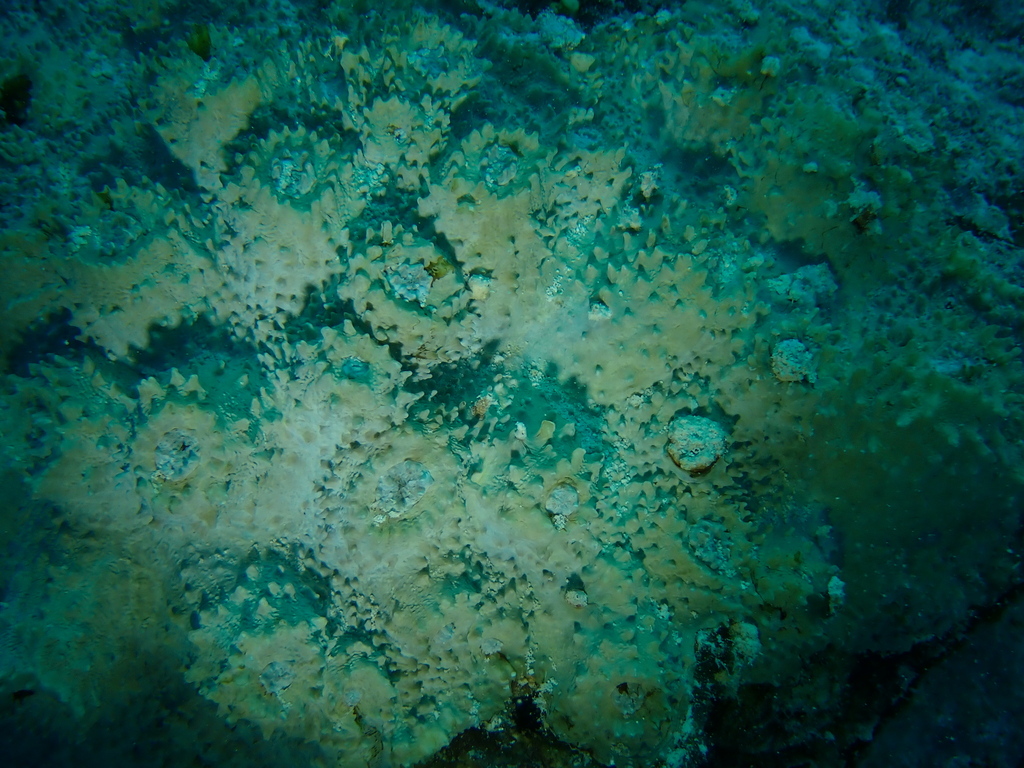
About Flat Lettuce Coral
The classic chalice coral — encrusting, fluorescent under blue light, and available in a huge range of named morphs. Hardy under moderate light and flow; benefits from occasional target-feeding of small meaty bits.
Echinophyllia aspera, commonly known as the Chalice coral, is a species of large polyp stony corals in the family Lobophylliidae. It is a colonial coral which is partly encrusting and partly forms laminate plates or tiers. It is native to the western and central Indo-Pacific.
Notes from the editors
What it looks like. Encrusting and partially plating coral with raised mouths (corallites) distributed across the surface. The "chalice coral" category covers many color morphs — most highly prized are the fluorescent "rainbow," "miami," and "watermelon" varieties.
In your tank. Peaceful to other corals visually, but deploys long sweeper tentacles at night that can sting neighbors up to 4 inches away. Plan placement with this clearance in mind. Slow grower but builds dramatic encrusting plates over time.
Placement and care. Low-to-moderate light is the most common mistake — too much PAR causes color loss and bleaching. Moderate, indirect flow. Target feeding small pieces of coral food or mysis 1–2 times per week intensifies color expression dramatically.
Sourcing and feeding. Captive-propagated frags are the standard ($30–200+, with named color morphs at the high end). Color stability under your specific lighting is unpredictable — some morphs revert to brown without the original photo period and intensity.
Care info is a starting point, not a guarantee. Individual specimens, water chemistry, and tankmate dynamics vary. Verify against multiple sources and adjust to what you observe. See our terms & disclaimers.
Related corals

Sources & attribution
- Taxonomy and accepted name from the World Register of Marine Species (WoRMS AphiaID 207370).
- Description content adapted from Wikipedia, available under CC BY-SA 4.0.
- Photo: (c) Debra Baker, some rights reserved (CC BY) · CC-BY (via iNaturalist or Wikimedia Commons).