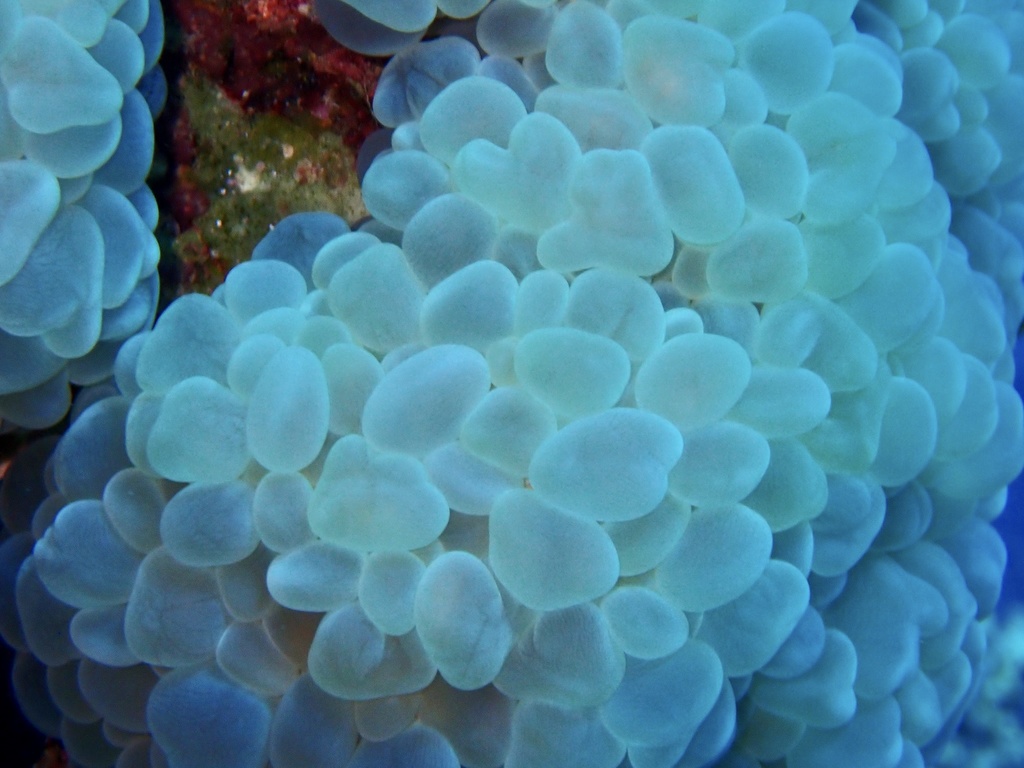
About Bubble Coral
Daytime water-balloons of "bubble" vesicles that deflate at night to reveal stinger tentacles. Striking and surprisingly easy in moderate light, but the sweepers are long — place where neighbors can't be reached.
Plerogyra sinuosa is a coral species of the phylum Cnidaria. It is commonly called "bubble coral" due to its bubbly appearance. The "bubbles" are grape-sized which increase their surface area according to the amount of light available: they are larger during the day, but smaller during the night, when tentacles reach out to capture food. This species requires low light and a gentle water flow. Common names for Plerogyra sinuosa include "grape coral", bladder coral, and pearl coral. According to the IUCN, Plerogyra sinuosa ranges from the Red Sea and Madagascar in the western Indian Ocean to Okinawa and the Line Islands in the Pacific.
Notes from the editors
What it looks like. Walled LPS coral covered in grape-sized water-filled vesicles ("bubbles") during the day. At night, the bubbles deflate and long stinger tentacles emerge. Color is typically pale green, blue-grey, or rare pink.
In your tank. The day-night transition is dramatic and worth observing. Sweeper tentacles at night can reach 6+ inches — give serious clearance from neighbors. Peaceful during the day but armed after dark.
Placement and care. Low-to-moderate light, low flow. Strong flow damages the delicate vesicles. Sandbed or low rockwork placement. Target feeding meaty foods at night when tentacles are extended accelerates growth.
Sourcing and feeding. Captive-propagated specimens available ($40–150). Photosynthetic with target feeding strongly recommended. Avoid handling the vesicles directly — they tear easily and the coral takes weeks to recover.
Care info is a starting point, not a guarantee. Individual specimens, water chemistry, and tankmate dynamics vary. Verify against multiple sources and adjust to what you observe. See our terms & disclaimers.
Related corals

Sources & attribution
- Taxonomy and accepted name from the World Register of Marine Species (WoRMS AphiaID 207498).
- Description content adapted from Wikipedia, available under CC BY-SA 4.0.
- Photo: no rights reserved · CC0 (via iNaturalist or Wikimedia Commons).